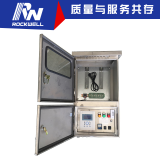
The RC series energy storage battery Main characteristics
1. High-efficiency energy storage and flexible charging and discharging
The household energy storage battery adopts high-energy-density LFP battery, with an energy storage efficiency of over 90%, and supports fast charging and discharging. Meanwhile, the system supports priority charging of renewable energy sources such as solar and wind power, and is compatible with energy storage during off-peak hours of the power grid, achieving "low-cost electricity storage and high-price electricity consumption". Some high-end models also support bidirectional charging and discharging, and sell electricity in reverse during peak grid demand periods to generate additional income.
2. Intelligent Energy Management System (EMS)
With built-in AI algorithms and Internet of Things (IOT) technology, energy storage batteries can analyze household electricity usage habits, electricity price fluctuations and weather data in real time, and automatically optimize charging and discharging strategies. For example, in time-of-use electricity pricing areas, the system charges during the low electricity price period in the early morning and supplies power to residents during the evening rush hour, saving electricity bills to the greatest extent. Users can also remotely monitor the battery level through the mobile phone APP, set the priority of electricity usage (such as that of refrigerators and medical equipment), interact with smart home devices, and achieve the full-process automation of "electricity usage - storage - control".
3. High safety and long service life
The LFP blade battery of the same type as BYD vehicles can effectively prevent combustion and explosion even in the case of high temperature or short circuit, and has passed international safety certifications such as UL 9540 and IEC 62619. The battery pack is equipped with multiple protection mechanisms such as temperature monitoring, overcharge and over discharge protection, and self-check for faults, with a service life of up to 10 to 15 years (with over 6,000 charge and discharge cycles). In addition, the modular design enables the system to operate at a low level even when a single battery fails, ensuring that the basic power supply is not interrupted.
4. Environmental Protection and Sustainable Development
Household energy storage batteries significantly reduce reliance on fossil fuels by maximizing the utilization of clean energy sources such as solar power. Take a typical 5kW photovoltaic +10kWh energy storage system as an example. It can reduce carbon dioxide emissions by 3 to 5 tons every year, which is equivalent to the environmental benefit of planting 150 trees. Meanwhile, over 95% of the materials of this battery can be recycled, avoiding the pollution problems of traditional lead-acid batteries and aligning with the global carbon neutrality goal.
5. Emergency power supply and off-grid capacity
When extreme weather conditions such as typhoons and earthquakes cause the power grid to collapse, energy storage batteries can switch to off-grid mode within 0.02 seconds and continuously supply power to critical loads such as lighting, communication equipment, and medical devices (typically supporting 12 to 24 hours). Some systems can also be expanded to a "whole-house backup power supply" mode to meet the high-power demands of air conditioners, kitchen appliances, etc., achieving energy self-sufficiency for more than 72 hours. This is particularly suitable for areas with unstable power grids.
6. Flexible adaptability and scalability
The household energy storage battery adopts a modular design, with a capacity that can be expanded from 5kWh to over 150kWh. The 5·50 kWh battery is suitable for various scenarios such as single-family villas, apartments, and small stores. Energy storage batteries with a capacity of over 50 KWH can be applied in shopping malls, residential areas, factories, and other scenarios. For instance, users can first install the basic capacity to meet their daily needs, and then gradually increase the configuration based on requirements such as electric vehicle charging and home expansion. In addition, this system is compatible with photovoltaic panels and inverters of different brands to build an integrated energy network.
|
Product model |
C4850 |
C48100 |
C48200 |
||||
|
Battery type |
LFP 3.2V 50AH |
LFP 3.2V 100AH |
LFP 3.2V 200AH |
||||
|
Battery capacity |
2.4kWh |
2.56kWh |
4.8kWh |
5.12kWh |
9.6kWh |
10.24kWh |
|
|
Rated discharge current |
50A |
50A |
50A |
50A |
50A |
50A |
|
|
Maximum discharge current |
100A |
100A |
100A |
100A |
100A |
100A |
|
|
Voltage range |
40.5~54V |
43.2~57.6V |
40.5~54V |
43.2~57.6V |
40.5~54V |
43.2~57.6V |
|
|
Standard battery unit voltage |
48V |
48V |
48V |
48V |
48V |
48V |
|
|
Maximum DC charging voltage |
54V |
57.6V |
54V |
57.6V |
54V |
57.6V |
|
|
Maximum charging current |
50A |
50A |
100A |
100A |
100A |
100A |
|
|
Single Cluster Battery Pack |
15S1P |
16S1P |
15S1P |
16S1P |
15S1P |
16S1P |
|
|
Rated output power |
5KW |
5KW |
5KW |
5KW |
5KW |
5KW |
|
|
Communication interface |
RJ45X1 RS485/232X2 CANX2 |
||||||
|
Power battery interface |
BAT+ X2 BAT- X2 |
||||||
|
Battery life |
Loop 3000~6000 times @DOD 80%/25℃/0.5C |
||||||
|
Maximum number of parallel machines |
15 |
||||||
|
Cooling mode |
Forced air cooling |
||||||
|
Protection |
Over (under) voltage protection/over current protection/over temperature protection/over discharge protection/short circuit protection |
||||||
|
Operating environment |
Temperature: -30~50℃ Humidity: 20~95RH% |
||||||
|
Maximum working altitude |
2500m(> 2000m load reduction required) |
||||||
|
Fire protection installation |
Heptafluoropropane gas fire extinguishing device |
||||||
|
Class of protection |
IP20 |
||||||
|
Communication mode |
Default: RS485/RS232/CAN |
||||||
|
Specification |
2U |
4U |
4U |
||||
|
size |
|
|
|
||||
|
RCH series (Rack stack install) |
|||||
|
Voltage |
Host and slave mode |
Battery pack specification |
Battery capacity |
Size(mm) |
Weight(kg) |
|
96V |
1 host 2 slave |
96V100Ah |
9.6kWh |
560*630*775 |
155 |
|
144V |
1 host 3 slave |
144V100Ah |
14.4kWh |
560*630*975 |
215 |
|
192V |
1 host 4 slave |
192V100Ah |
19.2kWh |
560*630*1175 |
275 |
|
240V |
1 host 5 slave |
240V100Ah |
24kWh |
560*630*1375 |
335 |
|
288V |
1 host 6 slave |
288V100Ah |
28.8kWh |
1200*630*1010 |
390 |
|
384V |
1 host 8 slave |
384V100Ah |
38.4kWh |
1200*630*1210 |
510 |
|
432V |
1 host 9 slave |
432V100Ah |
43.2kWh |
1200*630*1210 |
570 |
|
512V |
1 host 10 slave |
512V100Ah |
51.2kWh |
1200*630*1410 |
630 |
|
768V |
1 host 15 slave |
768V100Ah |
76.8kWh |
1200*655*2145 |
940 |
RDH series(Cabinet drawer type install)
Voltage
Host and slave mode
Battery pack specification
Battery capacity
Size(mm)
Weight(kg)
96V
1 host 2 slave
96V280Ah
26.88kWh
560*1000*900
270
144V
1 host 3 slave
144V280Ah
40.32kWh
560*1000*1150
395
192V
1 host 4 slave
192V280Ah
53.76kWh
560*1000*1400
520
240V
1 host 5 slave
240V280Ah
67.2kWh
560*1000*1650
645
288V
1 host 6 slave
288V280Ah
80.64kWh
1200*1000*1150
770
384V
1 host 8 slave
384V280Ah
107kWh
1200*1000*1400
1020
432V
1 host 9 slave
432V280Ah
120kWh
1200*1000*1400
1145
512V
1 host 10 slave
512V280Ah
143kWh
1200*1000*1650
1270
RSH series(gravity-stacked)
Voltage
Host and slave mode
Battery pack specification
Battery capacity
Size(mm)
Weight(kg)
96V
1 host 2 slave
96V100Ah
9.6kWh
Single layer + base + wheels 450*550*295mm,Then each floor height add high 197mm
123
144V
1 host 3 slave
144V100Ah
14.4kWh
170
192V
1 host 4 slave
192V100Ah
19.2kWh
167
240V
1 host 5 slave
240V100Ah
24kWh
265
288V
1 host 6 slave
288V100Ah
28.8kWh
310